

It is the first genuinely cold evening of the year, and before you have decided to do anything about it, your body has already made a plan. You move the lamp closer to the chair. You pull the blanket off the back of the sofa. You sit down without turning on the overhead light.
That small, automatic sequence is the beginning of a cozy winter nesting ritual — the instinct to prepare a place before a season you will spend mostly indoors. It is not a decorating project, it is not a shopping list, and it takes an afternoon, not a weekend.
Nesting Is an Instinct, Not a Decorating Project
Human beings have a name for this pull toward the inside of the house. The futurist Faith Popcorn coined the term "cocooning" back in 1981 to describe exactly this behavior — retreating into the home, closing the door on a world that feels too loud and too fast — and writers were still examining the same instinct forty years later in The Economist's 1843 magazine. (A house redivided: how the pandemic changed our homes)
The instinct is old, but the modern version tends to go wrong in one specific way: it turns into a project. Nesting becomes repainting, reorganizing, buying a new throw that sheds, and eventually an unfinished room you avoid. The version that actually helps is much smaller — one place, prepared well enough that you will use it every evening from November to March.
The Four-Part Nest
A nest needs four things, and three of them are probably already in your home.
- One corner. Not a room, not even a whole sofa. A chair, the end of a couch, a window seat, or the good side of a kitchen table. The requirement is that it belongs to one activity and is not also your desk, your dinner table, and your laundry staging area.
- One light. A lamp low enough to sit under — table lamp, floor lamp, or a warm bulb you can reach from the chair. Overhead light is what makes an evening feel like a shift; a low lamp is what makes it feel like an evening.
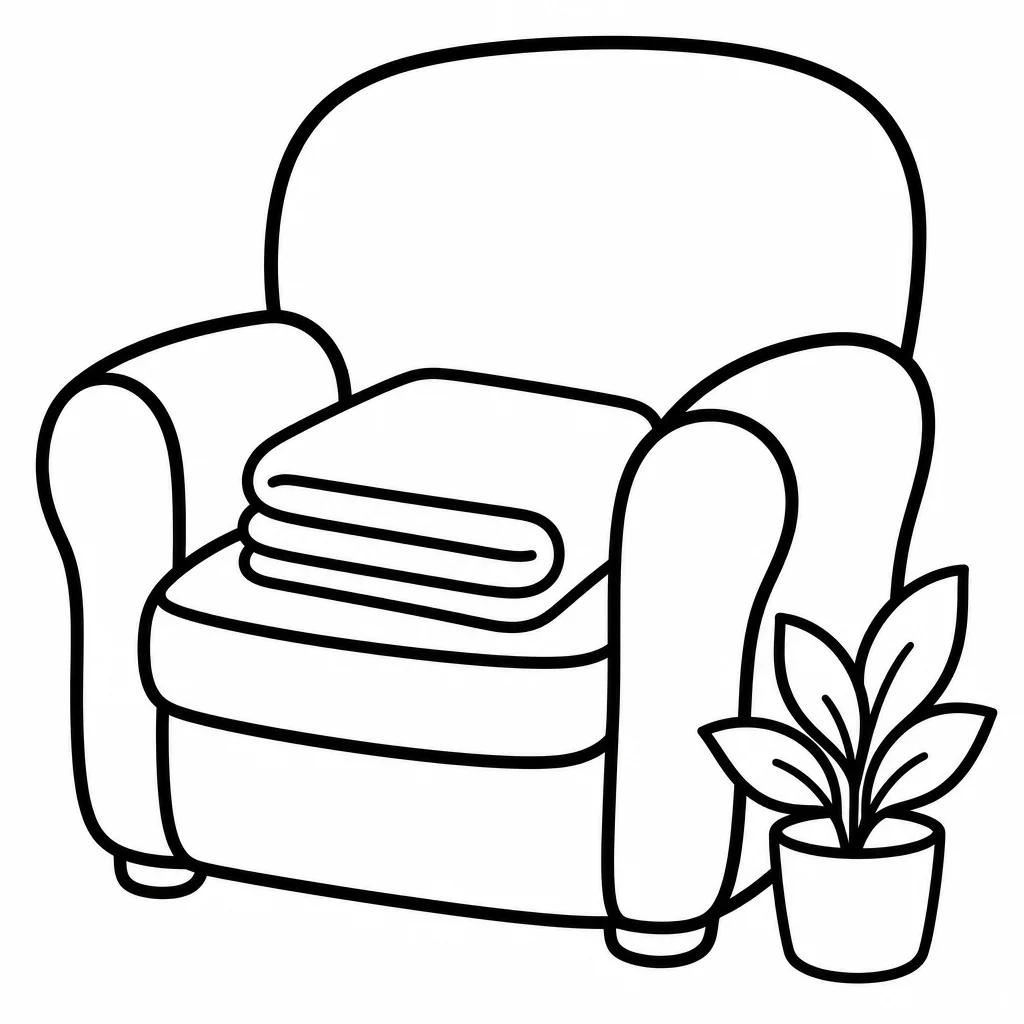
- One layer. A blanket, a cushion, or both. This is the part that turns a chair into a nest, and it is worth having somewhere to put them when you leave, so the corner stays inviting instead of becoming a pile.
- One activity with a home. For this ritual, that means a coloring book and a small pencil cup, kept where you sit — not in a drawer across the room and not in a tote bag you have to empty first. If the kit lives in the corner, the corner gets used; if it travels, it doesn't.
Notice what is missing from that list: storage systems, matching textiles, a new bookshelf, and anything that requires a decision after eight in the evening.
A Nesting Afternoon in Four Moves
You can set this up in about an hour, and the last move is the one that matters most.
- Clear one surface, and only one. Move what does not belong on the side table to somewhere else — a basket, a drawer, a different room. Do not start a whole-house tidy; the point is a place to put a mug down.
- Move the light before you move anything else. Sit in the chair at the hour you actually use it, usually after dark, and put the lamp where your hands and book are lit and your eyes are not. This one change does more for the corner than everything else combined.
- Put the activity in its place. Coloring book, pencil cup, sharpener, and a coaster. If you want a sound layer later, that can live there too, but nothing in the corner should require plugging in, logging in, or updating.
- Sit in it for twenty minutes and color one motif. This is the test sit, and it is non-negotiable. If the lamp is in the wrong place, you will know within five minutes. If the chair is cold, you will know. Fix one thing — not four — and try again tomorrow.
Most nests fail because they were designed while standing up, in daylight, in an optimistic mood. The test sit catches all three of those problems before the season starts.
The Weekly Reset
The nest does not stay ready by itself. Ten minutes each week keeps it working: clip a new page into the book, refill or resharpen the pencils, shake out the blanket, and take the mug to the kitchen. That is the whole list.
Do it on the same evening each week — Sunday is the obvious candidate — and treat it as part of the ritual rather than a chore attached to it. A corner that gets ten minutes of attention every seven days survives the winter; a corner that gets an hour of attention in October and nothing afterward becomes storage by January.
What to Color in a Nest
The pages that suit this corner are the ones that match the view — warm interiors, weather at the window, ordinary objects under good light.
- Interiors seen from a chair. A café window, a kitchen after dark, a room lit by a single lamp. Pages like these echo where you are sitting, which is a quietly satisfying effect.
- Mugs, kettles, cats, and windows. Everyday subjects you can finish in one sitting, with Bold & Easy 1.2pt outlines that do not demand close work under a low lamp.
- One long page for the week. Keep a detailed page on top of the pile and let it absorb whatever minutes you have — ten on Monday, twenty on Thursday. It becomes the season's shared project with yourself.
- Grayscale for the darkest weeks. When the light is genuinely bad, working only in light and shadow is easier on tired eyes than mixing a full palette.
If Other People Share the House
A nest does not need a spare room, and it does not need a family meeting. Pick a corner that is genuinely low-traffic — the end of the couch nearest the lamp, the chair people already avoid because it faces the wall — and use it consistently for two weeks. In shared houses, territory is granted by habit rather than by declaration.
If someone else wants their own corner, the practical arrangement is two chairs and one small table, with each person's supplies in their own basket. Parallel quiet works better than a shared activity, because nobody has to negotiate pace, palettes, or small talk.
If Your Winter Is Rain Instead of Snow
The ritual is about light and warmth, not weather. In a rainy climate, the corner becomes the place you watch the water hit the window; in a warm one, it becomes the first place the evening cools down. The four parts do not change — one corner, one light, one layer, one activity — and the pages just swap weather: rain on glass, streetlights in puddles, a fan, a cold drink next to the mug.
Frequently Asked Questions
Q: Isn't this just decorating with a different name?
A: Decorating changes how a room looks. Nesting changes where you sit and what you do there. If the corner is prettier but you still spend the evening in the kitchen standing up, nothing has been nested.
Q: My home is tiny. What is the smallest version that works?
A: One chair, one lamp, and a tray or basket that holds the book and pencils. In the smallest version the nest and the tray are the same object; you move it to wherever you are sitting and set it down.
Q: When should I set it up?
A: Before you need it — when the first cold evening makes you reach for a blanket, which is usually several weeks before you would call it winter. Setting up while the instinct is fresh is what makes the corner feel earned rather than assigned.
Q: Do I have to buy anything?
A: Probably not. Most people already own a lamp, a blanket, and a chair. If you buy one thing, make it the light: a warm low bulb costs less than a new throw and does more.
Q: What if I lose interest in the corner by January?
A: That is usually a sign the corner is too far from the rest of your evening, or the kit is out of reach. Move the basket to where you already sit, or move the chair closer to where the house actually happens. Interest follows access.
Q: Can I set up a nest for someone else?
A: Only with their chair and their lamp, and only if they asked. A nest built for another person lands as an assignment. The one exception is a shared reading-and-coloring table, which works when both people choose it.
A Final Thought: Preparing a Place for the Indoor Version of You
For the next four months, a good portion of your life will happen inside a small number of square feet. The nesting ritual is simply the decision to make one of those feet comfortable on purpose — before the season decides for you.
One corner, one lamp, one blanket, one page. Set it up on the first cold evening, reset it every Sunday, and the winter you are walking into gets a place to land.
If you want pages that suit a lamplit corner, Cozy Cafe is full of warm interiors at $6.99, and Morning Simmer & Sunlight adds a soft kitchen-morning sound layer for $2.99. For the deeper version of the same idea — designing a home that stays restful all season — The Sensory-Safe Home is the companion guide.