

When modern life leaves your nervous system humming with chronic overstimulation, sitting down in absolute silence can sometimes feel counterproductive. You open a notebook or sit on the sofa attempting to unwind, but in the quiet, your internal monologue only grows louder. To-do lists, unfinished conversations, and unresolved anxieties rush in to fill the sensory void. This is precisely why pairing coloring with asmr ambient soundscapes has emerged as one of the most effective, gentle relaxation rituals for adults with restless minds.
Rather than demanding forced meditation or unnatural stillness, a dedicated practice of coloring with asmr ambient soundscapes creates a soothing sensory cocoon. By gently engaging your hands, eyes, and ears simultaneously, you occupy just enough cognitive bandwidth to crowd out anxious rumination, allowing your body to settle into natural, unforced calm.
Beyond Silence: Why Overstimulated Minds Need Dual-Sensory Anchoring
In our fast-paced culture, relaxation is often framed as the complete absence of stimulation. We are told to sit in a quiet room, close our eyes, and empty our thoughts. Yet for neurodivergent individuals, high-stress professionals, and anyone experiencing chronic mental fatigue, empty silence can feel like an echo chamber for stress.
The human brain evolved to process rich, rhythmic ambient cues from the living natural world: the rustle of leaves, the crackle of campfire embers, and the steady cadence of rainfall. When placed in sterile silence after a demanding day of digital screens, the nervous system often perceives the stillness as unnatural, keeping the brain on high alert.
By introducing dual-sensory anchoring—combining the rhythmic tactile motion of felt markers on textured paper with comforting acoustic backgrounds—you provide the mind with a grounding baseline. Research on sleep and autonomic regulation synthesized by the Sleep Foundation on what ASMR is and how it helps relaxation demonstrates that specific low-frequency auditory triggers can significantly lower heart rate, reduce subjective stress, and encourage the production of restorative alpha brainwaves. When your auditory and tactile senses are harmoniously engaged, deep relaxation becomes effortless.
The Neuroscience of Sound and Touch: How ASMR Lulls the Anxious Amygdala
Autonomous Sensory Meridian Response (ASMR) is more than just pleasant internet tingles; it is a neurological tool for nervous system down-regulation. When you listen to gentle, predictable soundscapes through quality headphones, several powerful biological shifts take place:
- Down-Regulating the Threat Center: Constant notifications, alarms, and sudden workplace interruptions keep the amygdala perpetually activated. Predictable, gentle ambient sounds signal safety to the primitive brain, prompting the parasympathetic nervous system to take over.
- Tactile Friction as Biological Grounding: The physical sensation of a bold marker gliding across heavy cardstock produces organic friction. You feel the micro-vibrations in your fingertips, hear the soft paper whisper, and watch bold pigment saturate the page. This tactile feedback loop firmly anchors awareness in the physical body.
- Induced Alpha Wave Synchronization: The combination of simple visual repetition and binaural sound nudges the brain out of high-frequency beta waves (associated with active problem-solving and worry) and into relaxed alpha rhythms (associated with daydreaming, mindfulness, and creative recovery).
Practicing coloring with asmr ambient audio turns creative leisure into a restorative bio-hack that requires zero willpower.
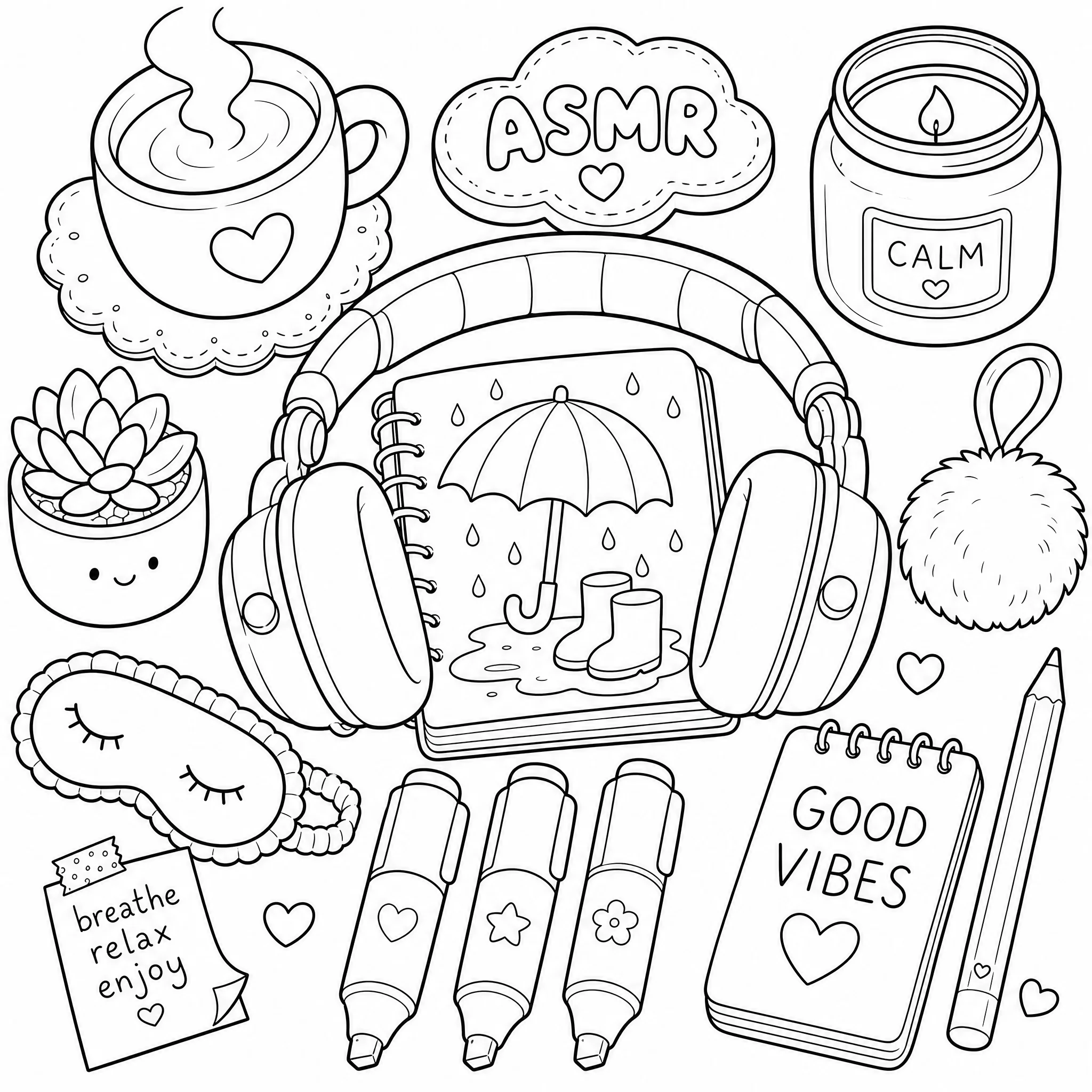
The Three Soundscape Archetypes: Curating Your Auditory Cocoon
The soundscape you choose sets the emotional architecture of your coloring session. Depending on your energetic needs, you can rotate between three proven acoustic archetypes:
1. The Hearthside Refuge (Fireplace Crackle & Woolen Textures)
Best suited for cold winter evenings or moments when you feel emotionally depleted. The deep, irregular pops of burning birch logs, the faint hiss of cedar resin, and the ambient hum of a sheltered room foster feelings of deep physical warmth and security. As you color a plush armchair or a sleeping kitten on the page, the crackling hearth audio tricks your nervous system into feeling physically protected from external cold and chaos.
2. The Atmospheric Rainstorm (Window Panes & Steaming Kettles)
Ideal for afternoon brain resets or clearing mental fog. The steady, white-noise frequencies of rain falling on a glass skylight, accompanied by the gentle whistle of a stovetop tea kettle, mask harsh urban noises and induce deep mental clarity. The steady patter acts like an acoustic broom, sweeping away residual anxiety from hectic morning meetings. If you love rainy atmospheres, our guide to the Rainy Day Coloring Ritual for Adults explores how misty afternoons unlock quiet creativity.
3. The Antiquarian Nook (Pages Turning & Dust Motes)
Perfect for weekend mornings or unwinding after screen-heavy work. Faint ticking clocks, the soft whisper of turning paper pages, and distant acoustic strings evoke the peaceful nostalgia of an old bookshop or library corner, slowing your internal pulse. When your marker tip joins the paper, its physical friction blends seamlessly into the auditory rhythm of turning leaves, making you feel like a quiet scholar in a timeless sanctuary.
The Tactile Half of the Equation: Why Bold & Easy Lines Matter
An auditory soundscape can only do half the work; the visual material in front of you must support the same low-pressure ethos. Traditional adult coloring books with microscopic mandalas, razor-thin lines, and hundreds of tiny intricate sections often backfire, triggering visual fatigue and perfectionist performance anxiety. When you must squint at hairline borders and constantly worry about staying within microscopic boundaries, your brain remains in hyper-vigilant beta waves.
For true sensory restoration, pairing your audio with Bold & Easy designs is essential. Bold lines (ranging from 1.2pt to 12pt thickness) and spacious, open compositions provide a forgiving canvas where you cannot make a mistake. The heavy black contours absorb minor slips effortlessly, granting your hands total creative permission. Furthermore, the broad spaces invite the smooth, streak-free glide of chisel and brush markers, maximizing the satisfying visual payoff of vibrant, creamy color saturating clean white space.
Our bestselling collection Cozy Nooks (Printable PDF) is intentionally designed for this exact ritual. Featuring sunlit window seats, stacked blankets, steaming mugs, and peaceful corner sanctuaries, its generous spaces allow you to color freely with smooth, broad strokes while your ears drink in calming soundscapes. Each illustration acts as a physical visual counterpart to your favorite acoustic haven, transporting your mind straight into the scene.
Setting Up Your 20-Minute Multi-Sensory Haven
To get the most out of your session, treat the setup as an intentional transition ritual rather than a rushed activity. You only need twenty minutes to experience a full physiological reset:
- Comfortable Headphones: Over-ear headphones or well-fitted earbuds enhance the binaural, spatial qualities of ASMR, creating an immersive acoustic boundary that blocks household distractions.
- Warm, Direct Illumination: Turn off harsh overhead LED lights. Position a warm-toned (2700K) desk lamp directly over your page, casting a golden pool of light on the white paper while the rest of the room remains gently shaded.
- A Streamlined Palette: Limit yourself to four or five markers before beginning. Having too many color choices triggers decision fatigue, disrupting the hypnotic flow of the audio.
- A Steaming Warm Drink: A cup of herbal tea, hot cider, or spiced milk warms your hands and activates digestion-friendly parasympathetic cues.
- Digital Sunset Integration: If you practice this before bed, combining coloring with asmr ambient soundscapes makes a phenomenal cornerstone for a screen-free wind-down. Check out our frameworks in the Digital Sunset Routine for Adults to transform restless bedtimes into restorative slumbers.
Three Ground Rules for Pure Immersion (No Audio-Surfing)
To safeguard your sanctuary and prevent modern distractions from invading your coloring time, embrace these three simple boundaries:
1. Lock Your Playlist Before You Open the Book
Audio-surfing—constantly skipping tracks, tweaking volume levels, or hunting for the "perfect" rain sound—destroys immersion. Select a continuous 30-to-60-minute ambient track before you pick up your marker, put your phone face down, and do not touch it again until your page is finished.
2. Match Marker Speed to Acoustic Cadence
Let the rhythm of the audio guide your hand. If listening to slow, rolling thunderstorm audio, allow your marker strokes to be long, unhurried, and deliberate. Matching your physical movement to acoustic rhythm deepens the meditative trance.
3. Release All Expectations of Completion
If twenty minutes pass and you have only filled three shapes, that is a complete success. The value of coloring with asmr ambient audio lies entirely in the present sensory experience, never in the speed or productivity of your output.
Frequently Asked Questions
Do I need to experience "tingles" for ASMR coloring to work?
Not at all. While some people experience physical tingling sensations on their scalp or neck, the primary psychological benefit of ASMR ambient audio is acoustic comfort and nervous system stabilization. Even without physical tingles, steady ambient frequencies quiet mental chatter.
What volume level is recommended for ASMR audio?
Keep the volume relatively low—around 30% to 40% of maximum capacity. The soundscape should feel like an ambient room texture that exists just behind your thoughts, never loud enough to demand active, conscious listening.
What are the best markers for coloring with headphones on?
Water-based brush markers or soft-core felt pens glide across paper with a gentle, whispering tactile drag that feels wonderful in the hand. If using alcohol markers, ensure your printable sheets are backed with a blotter card to prevent ink from soaking through.
A Gentle Closing Note: Returning Home to Your Senses
In a world that constantly demands your analytical attention, your opinions, and your immediate digital responses, granting yourself permission to simply exist inside sound and color is an act of gentle preservation.
Tonight, put on your headphones. Let the crackle of distant embers or the soft rustle of autumn leaves fill your ears. Pick up a warm honey-yellow marker, feel the satisfying tooth of the paper beneath your fingers, and let the outside world fade away.
Your mind does not need fixing; it simply needs a soft, rhythmic place to land.