

Quiet the Overload: How Bold & Easy Coloring Supports Sensory Processing Disorder
For many adults in the Neurospicy community, the world is often "too loud." This doesn't just refer to noise—it’s a constant barrage of sensory input: bright lights, scratchy fabrics, and overwhelming visual clutter. This experience is the hallmark of Sensory Processing Disorder (SPD), a condition where the brain struggles to organize and respond to information coming in through the senses.
When you're constantly in a state of sensory hyper-arousal, traditional relaxation methods like "watching a movie" or "going for a walk" can sometimes add to the noise. This is why a growing number of therapists and individuals are turning to a surprisingly simple tool for sensory regulation: Bold & Easy Coloring.
In this guide, we’ll explore the science of visual overload and why the specific design choices at CozyColor Sanctuary make our books a functional sanctuary for those with SPD.
The Challenge of Visual Overload
To understand why "simple" coloring wins, we first have to understand the SPD brain’s relationship with detail. Traditional adult coloring books are often marketed as "intricate" and "detailed." For a typical brain, this might be a fun challenge. But for someone with sensory sensitivities, an intricate page can trigger Visual Overload.
When there are too many tiny lines and complex patterns, the brain has to work overtime to distinguish between foreground and background. This visual "noise" can lead to:
- Decision Fatigue: "Which tiny dot do I color next?"
- Physical Anxiety: A literal tightening in the chest or headache from focusing on minute details.
- Shutdown: Giving up on the activity because it feels like "work" rather than rest.
## Why Bold & Easy Lines Act as a "Sensory Anchor"
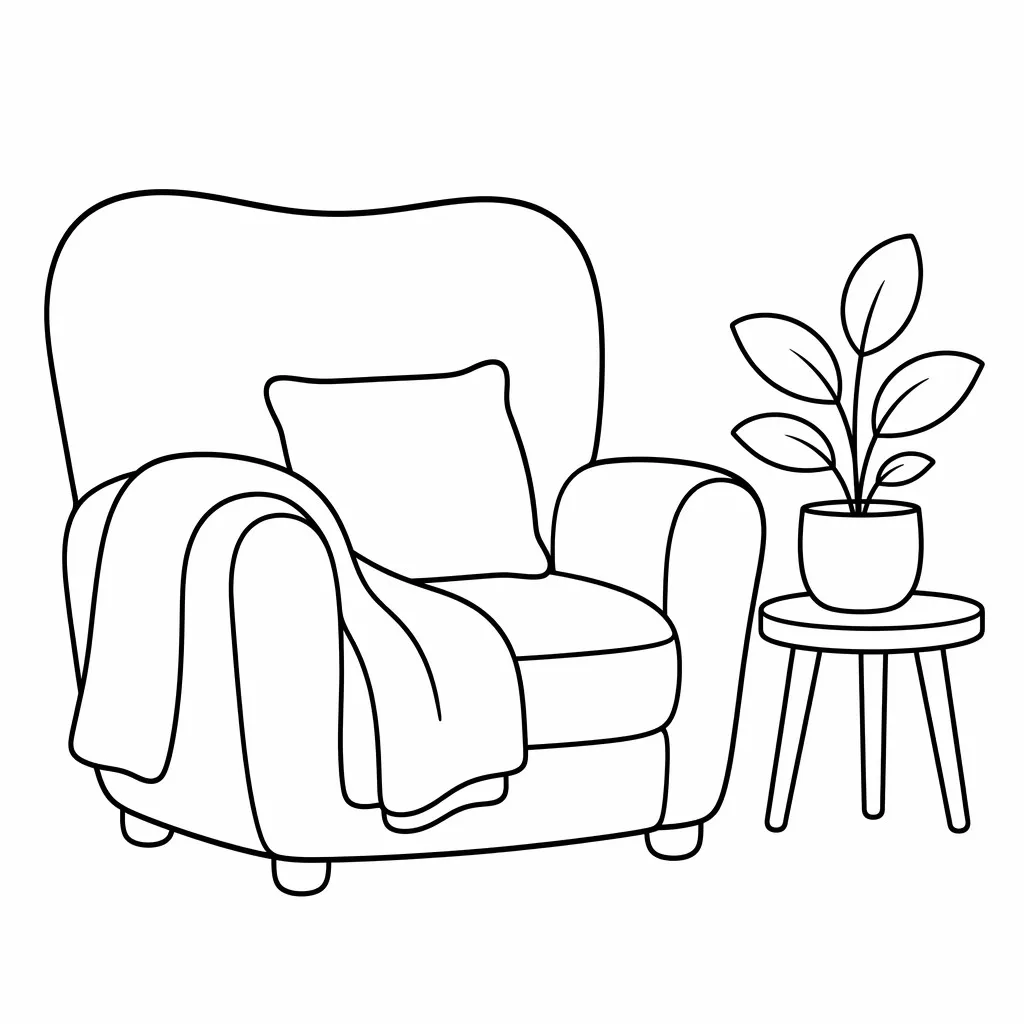
Our Bold & Easy style is more than just an aesthetic choice; it is an accessibility feature. By prioritizing thick black outlines and large, uncomplicated shapes, we provide what sensory experts call a "Visual Anchor."
1. High Contrast for Easier Tracking
The high contrast between the thick black lines and the white paper helps the brain easily define the boundaries of the task. For those with SPD, this clarity is calming. It removes the ambiguity of the image, allowing the eyes to rest on a stable, predictable structure.
### 2. Reducing Micro-Decisions
In a Bold & Easy design, a page might only have 10-15 large sections rather than 500 tiny ones. This reduces the cognitive load of color selection and placement. You can sink into the "Flow State" much faster when the path forward is clear and low-stakes.
### 3. Tactile Satisfaction
There is a unique tactile satisfaction in filling a large area with color, especially when using alcohol-based markers. The smooth, juicy application of ink over a wide space provides a rhythmic, repetitive motion that is inherently grounding for the nervous system.
## Building Your Sensory-Friendly Coloring Routine
If you use coloring as a tool for sensory regulation, the environment is just as important as the book. Here is how to set up a true "Sensory Sanctuary."
### Step 1: Control the Lighting
Fluorescent lights are a common trigger for SPD. Use a warm, adjustable desk lamp or color-changing smart bulbs set to a soft amber or peach tone. This lowers the visual "volume" of the room.
### Step 2: Incorporate ASMR Soundscapes
We designed our Sound Edition specifically for multi-sensory grounding. If you find silence too "loud" or certain noises too sharp, pairing your coloring with a curated ASMR Ambient Soundscape (like soft rain or a low-frequency fireplace) can mask environmental distractions and provide a consistent auditory "hug."
### Step 3: Choose Low-Resistance Tools
For many with SPD, the "scratchy" sound or feel of a cheap colored pencil can be a massive trigger. We highly recommend using Alcohol Markers or high-quality, soft-core colored pencils. These tools glide across the paper with minimal friction, providing a smooth sensory experience.
## Conclusion: Simplicity as a Form of Self-Care
Self-care should never feel like a chore. If you have spent years feeling frustrated by "intricate" coloring books, it’s not because you aren't "good at art"—it’s because your brain is asking for a sanctuary, not a project.
By embracing Bold & Easy coloring, you are giving your nervous system permission to power down. You are choosing a path that prioritizes your peace over the "performance" of art.
Ready to find your sensory anchor?
Explore our [ADHD & SPD Friendly Starter Bundles](https://cozycolorsanctuary.com/collections/starter-bundles) and discover the healing power of a single bold line.
*Breathe in. Color out. Find your sanctuary.*
---
### SEO Metadata
Page Title (56/60 chars): How Bold Coloring Supports Sensory Processing Disorder (SPD)
Meta Description (154/155 chars): Discover why simple coloring designs are the ultimate tool for SPD and sensory overload. Learn how bold lines act as a visual anchor to restore mental calm.
URL Slug: /blogs/news/coloring-for-sensory-processing-disorder-guide
### Internal Link Suggestions
- [Shop Bold & Easy Designs] → [/collections/shop-all-sanctuary]
- [Learn about the Dopamine Hit of Completion] → [/blogs/news/science-of-simple-coloring-benefits]
### Keyword Usage
- Primary KW: "Sensory Processing Disorder" (3 times)
- Secondary KWs: "Bold & Easy coloring", "visual overload", "sensory grounding", "neurospicy self-care", "SPD relaxation tools".