

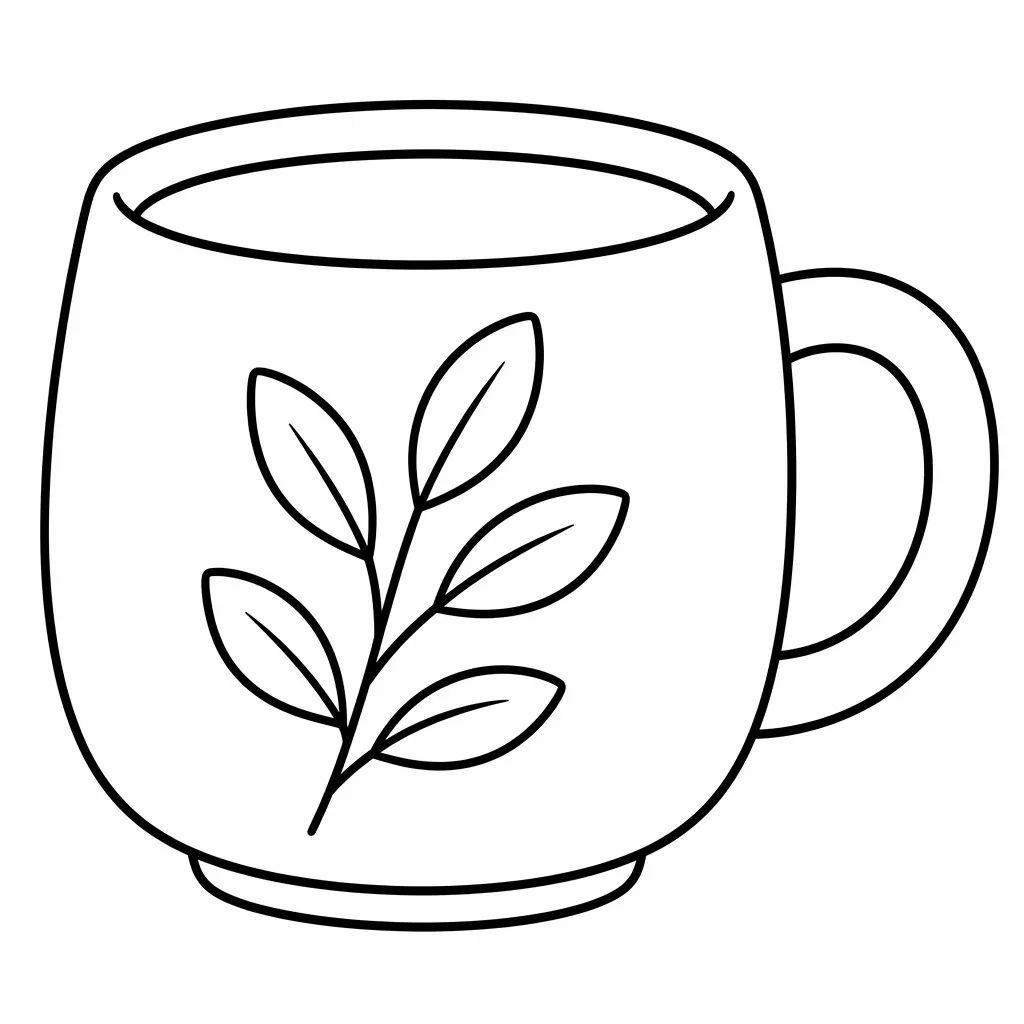
Minimalism & Anxiety: Why Simple Designs Win Over Complex Art
When people think of "adult coloring," they often envision hyper-detailed mandalas with thousands of microscopic sections. While these can be beautiful, they often present a hidden barrier for those already struggling with anxiety. For someone in the midst of a "high-cortisol" moment, a complex design can feel like another chore—a puzzle to be solved rather than a sanctuary to be enjoyed.
This is where minimalist coloring designs shine. By embracing "less is more," simple art provides a faster, more accessible path to anxiety relief.
The Zeigarnik Effect: Why Unfinished Mandalas Cause Stress
Have you ever started a complex coloring page only to abandon it halfway through because it felt like too much work? Psychologically, this triggers the "Zeigarnik Effect"—the tendency to remember uncompleted tasks better than completed ones. This creates a "mental tab" that stays open, draining your cognitive energy and contributing to a sense of "ambient anxiety."
Minimalist coloring designs solve this problem by being "finishable." When you complete a page in one sitting, you close the loop. This provides a sense of mastery and closure that is highly therapeutic for an anxious mind.
## Sensory Overload vs. Minimalist Aesthetics
For individuals with sensory processing sensitivities or ADHD-related anxiety, complex patterns can be physically jarring. The eye doesn't know where to land, and the brain has to work overtime to categorize the information.
- Visual Silence: Minimalist art provides "visual silence." Much like the quiet of a library, the simplicity of the design allows your sensory system to down-regulate.
- Predictability: Anxious minds crave predictability. Simple, clear designs provide a safe, predictable environment where there are no "surprises" or hidden complexities.
## The Overwhelmed Brain and "Decision Fatigue"
Anxiety is often characterized by a sense of being overwhelmed—too many thoughts, too many choices, too much noise. When you present an anxious mind with a complex, intricate pattern, you risk triggering "decision fatigue."
- Which color goes in this tiny triangle?
- Will I mess up this thin line?
- How many hours will this take to finish?
In contrast, a minimalist design removes these barriers. It offers clear boundaries and ample white space, allowing the brain to breathe. It moves the focus from "doing it right" to simply "doing."
## The Psychology of Simple Art for Anxiety Relief
1. The Low-Pressure Entry Point
The greatest hurdle to starting a self-care activity is often the perceived effort. Minimalist coloring designs have a low barrier to entry. You can finish a page in 15-20 minutes, providing an immediate hit of dopamine and a sense of completion. This is crucial for breaking the cycle of anxious rumination.
### 2. Focus on Flow, Not Perfection
Flow state is a psychological condition where you are fully immersed in an activity. Complex art can disrupt flow with technical frustration. Simple art, with its bold lines and clear shapes, encourages rhythmic movement. The repetitive motion of filling a large, simple area is meditative and grounding.
### 3. Space for the Mind to Wander
Intricate designs demand 100% of your cognitive attention just to stay within the lines. While this can be a good distraction, it doesn't always allow for "productive daydreaming." Minimalist art provides enough structure to keep you focused but enough "negative space" to allow your thoughts to settle and organize.
## Designing Your Minimalist Sanctuary
Not all simple designs are created equal. At Cozy Color Sanctuary, we focus on specific elements that maximize anxiety relief:
- Organic Shapes: Soft curves and natural forms (like leaves, clouds, or stones) are more soothing than sharp, jagged geometric angles.
- Thick Lines: Bold outlines reduce the fear of "making a mistake," which is a common stressor for perfectionists.
- Themed Simplicity: Focusing on one central object—a single coffee cup, a lone cat, a quiet window—helps ground the viewer in one specific "moment."
## How to Practice Minimalist Coloring for Max Results
To get the most anxiety relief from your minimalist coloring designs, try these tips:
1. Limit Your Palette: Don't bring out the 120-pack of pencils. Choose 3-5 colors that feel "safe" or "cozy" to you.
2. Embrace the White Space: You don't have to color every inch. Minimalist designs are meant to feel airy.
3. Repeat Patterns: If you find a shape you like, try coloring it several times with different shades to experience the "rhythm" of the design.
## Color Psychology for Minimalist Anxiety Relief
In a minimalist design, each color you choose carries more weight. To maximize anxiety relief, consider these palettes:
- The "Cooling" Palette: Blues and greens lower the heart rate and evoke the calming essence of water and forests.
- The "Earthy" Palette: Terracottas, sages, and warm beiges provide a "grounding" effect, making you feel stable and connected to the physical world.
- The "Monochromatic" Approach: Using different shades of just one color eliminates the stress of "color matching" entirely, allowing you to focus purely on the tactile sensation.
## The Role of Negative Space
In minimalist art, the area *not* colored (the negative space) is just as important as the colored parts. Learning to appreciate and leave negative space is a metaphor for mental health: it's okay to have "empty" time and space in your life. You don't have to fill every moment with productivity or noise.
[Internal Link Placeholder: Download our "Pure Simplicity" Minimalist Collection]
## Frequently Asked Questions (FAQ)
### Isn't simple coloring just for kids?
Not at all. While the designs may look simpler, the *intent* is different. For adults, it's about neurological "un-loading." It's a sophisticated tool for managing sensory overwhelm.
### Can simple designs really help with severe anxiety?
While not a replacement for professional therapy, minimalist art is a scientifically backed "grounding tool." It helps regulate the autonomic nervous system by providing a non-threatening, tactile task.
### Why do I feel guilty for not finishing a complex page?
That's the "Productivity Trap." Anxiety often makes us feel like everything must be an achievement. Switching to minimalist designs helps retrain your brain to value the *process* over the *product*.
### Where can I find high-quality minimalist designs?
Look for "line art" or "boho coloring" styles. Our shop specializes in cozy, minimalist aesthetics specifically designed for mental wellness.
## Conclusion
In a world that is increasingly complex, simplicity is a revolutionary act of self-care. If you find that "traditional" adult coloring books make you more stressed, it’s time to try minimalist coloring designs. Less detail doesn't mean less value—it means more room for peace.
[Internal Link Placeholder: The Science of "Soft Fascination" in Simple Art]