

In a world that constantly demands our attention, the ADHD brain often feels like it's running a dozen different race tracks at once. Distractions are everywhere??rom the ping of a notification to the stray thought about a meeting three days from now. When traditional focus techniques like "just making a list" or "sitting in silence" fail, many adults are turning to a surprisingly tactile solution: Mindful Coloring for ADHD Concentration.
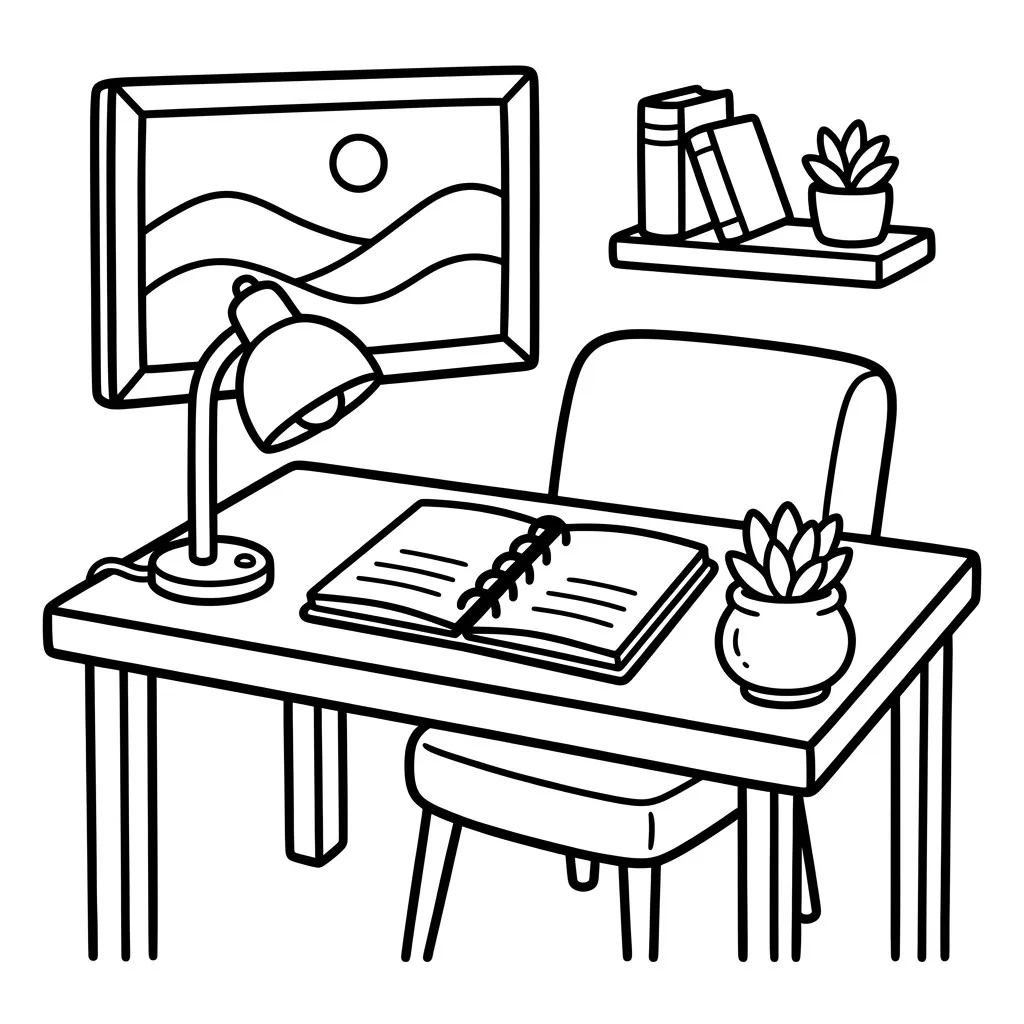
A 'Bold & Easy' focus anchor: simple lines designed to clear mental clutter.
While coloring was once seen as a simple pastime for children, neuroscientists and art therapists now recognize it as a powerful tool for cognitive regulation. In this guide, we??l dive into why coloring is an executive function "hack" and provide practical techniques to help you use "Bold & Easy" art to anchor your wandering mind.
The Science: Why Coloring Boosts Concentration
To understand how Mindful Coloring for ADHD Concentration works, we have to look at how the ADHD brain processes stimulation. ADHD is often characterized by a "stimulus hunger"??he brain is constantly searching for just enough dopamine to stay engaged. If an environment is under-stimulating, the brain wanders. If it?? over-stimulating, it shuts down.
1. The "Just Right" Level of Stimulation
Coloring provides what psychologists call "low-stakes stimulation." It occupies the hands and a portion of the visual cortex without requiring heavy linguistic or analytical processing. This creates a "secondary track" for the brain to run on, which actually frees up the primary track to focus on the present moment or process complex thoughts in the background.
2. Shifting from Beta to Alpha Brainwaves
When you're stressed or scattered, your brain is likely producing high-frequency Beta waves. The repetitive, rhythmic motion of coloring helps shift the brain into Alpha waves??he state associated with "relaxed alertness." This is the sweet spot for concentration.
5 Techniques for Mindful Coloring with ADHD
Simply picking up a marker is a great start, but these targeted techniques can turn a hobby into a functional focus tool.
1. The 10-Minute Transition Ritual
The ADHD brain struggles with "task switching." Moving from a high-intensity workday to a restful evening can result in "revenge bedtime procrastination." Use 10 minutes of Mindful Coloring as a bridge. It signals to your nervous system that the work day is over, preventing the mental "after-burn" that keeps you awake.
2. Pair with Auditory Anchors (ASMR)
Since your hands and eyes are busy, your ears are still "available" to be distracted. At CozyColor Sanctuary, we advocate for the "Sound Edition" approach. Pair your coloring with an ASMR Ambient Soundscape??ike a crackling fire or a rainy greenhouse. This auditory anchor blocks out sudden noises that might break your focus.
3. Focus on the Sensation, Not the Result
Mindfulness is about the process. Notice the sound of the marker on the paper. Observe how the ink saturates the fibers. Feel the weight of the pencil in your hand. When your mind wanders (and it will), gently acknowledge the thought and bring your attention back to the physical sensation of coloring.
4. Use a Limited Palette to Avoid Decision Fatigue
Decision fatigue is a major focus-killer for ADHD. Instead of looking at a 100-pack of markers, pick just 3 to 5 colors before you start. This simplifies the creative process, allowing you to stay in the "flow state" longer.
5. Choose High-Contrast, Bold Lines
Intricate, "adult" coloring books with thousands of tiny dots can be overstimulating for an ADHD brain. This often leads to "perfectionism paralysis." Opt for Bold & Easy designs??he thick lines provide a clear visual boundary and a sense of safety, making it much easier to start and finish a page.
Selecting the Right Designs for Concentration
Not all coloring pages are created equal when it comes to focus. For maximum concentration, look for designs that feature:
- Large, Open Shapes: To allow for smooth, satisfying marker strokes.
- Relatable, Cozy Themes: Scenes of reading nooks, garden paths, or cozy kitchens provide a "mental escape" that is inherently non-threatening.
- Symmetry: Repetitive, symmetrical patterns are particularly effective for grounding a scattered mind.
Frequently Asked Questions
Q: Can coloring actually help me focus during long meetings?
A: Yes! Many people find that "fidget coloring" during a call (especially if it?? audio-only) actually helps them process information better by keeping their "background brain" occupied.
Q: What markers are best for maintaining focus?
A: Alcohol markers are a community favorite because they are juicy and provide instant, vibrant results. The immediate visual feedback provides the quick "dopamine hit" that keeps the ADHD brain engaged.
Q: How long should I color to see a difference in concentration?
A: Even 5 to 15 minutes of Mindful Coloring for ADHD Concentration can trigger a significant "brain reset." It?? better to do a short, daily session than a long, occasional one.
Conclusion: Build Your Focus Sanctuary
Concentration isn't a fixed trait; it's a muscle that can be supported with the right tools. By incorporating Mindful Coloring into your daily routine, you aren't just "filling in lines"??ou are training your brain to find its quiet center.
Ready to anchor your mind?
Explore our ADHD-Friendly "Bold & Easy" Bundles ??designed specifically to help busy minds find instant calm and lasting focus.
Breathe in. Color out. Stay focused.