

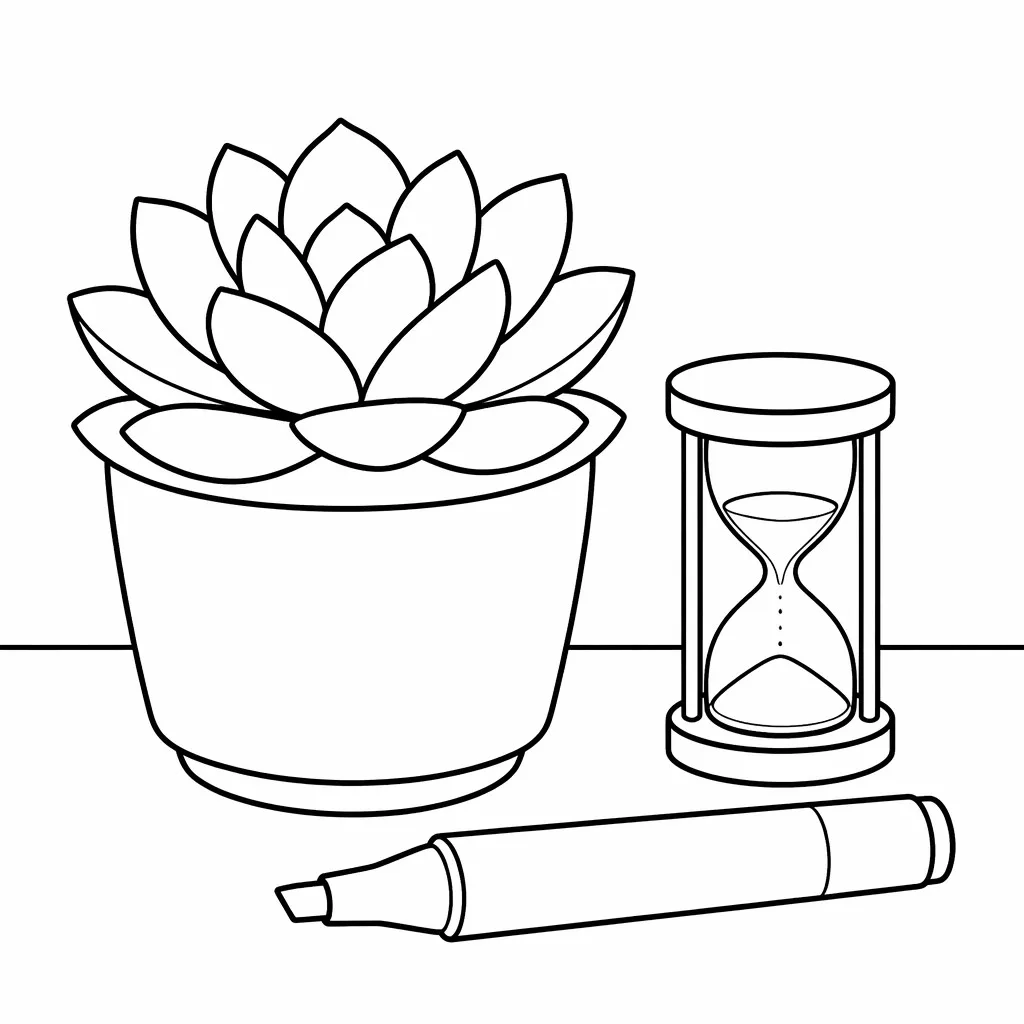
The Attention Anchor: A Deep Dive into Mindful Coloring for ADHD Concentration
For the neurodivergent brain, concentration is rarely a straight line. It is a constant battle against "shiny object syndrome," internal racing thoughts, and the paralyzing weight of executive dysfunction. When you have ADHD, the instruction to "just focus" is as helpful as telling someone to "just be taller." Your brain needs a tool—a physical, rhythmic anchor to hold it in the present moment.
This is where Mindful Coloring for ADHD Concentration shifts from a simple hobby to a functional cognitive tool. At CozyColor Sanctuary, we don't just design coloring books; we engineer sensory safe-havens. In this 1500-word flagship guide, we’ll explore the neurological science of why coloring works for ADHD focus and show you how to master the 15-minute "Attention Anchor" ritual.
1. The Science of the "Busy Hand, Quiet Mind"
Why does a visual task like coloring help an ADHD brain concentrate on *other* things or simply find peace? The answer lies in Kinesthetic Grounding and the regulation of the Default Mode Network (DMN).
The Dopamine Reward Loop
ADHD brains are biologically hungry for dopamine. Traditional mindfulness can feel under-stimulating, leading the mind to wander into stressful territory. Mindful coloring provides immediate, low-stakes visual feedback. Every time you fill a shape, your brain receives a micro-dose of dopamine—a "quick win" that keeps the prefrontal cortex engaged without the pressure of a "high-stakes" task.
### Anchoring the Default Mode Network
The DMN is the part of the brain that is active when we are daydreaming or ruminating. In ADHD individuals, the DMN is often overactive. By engaging in mindful coloring for ADHD concentration, you provide just enough "background noise" for your hands and eyes to occupy the DMN, allowing your conscious mind to find a steady center of gravity.
## 2. Why "Bold & Easy" is the Standard for ADHD Focus
Standard adult coloring books are often filled with microscopic patterns and "mandala" styles. For an ADHD brain, these can actually *increase* stress through decision fatigue. *Which of these 50 tiny leaves should I color first? Did I cross that hair-thin line?*
Our signature Bold & Easy standard (featuring 1.2pt thick outlines) is designed to eliminate this friction:
- Reduced Cognitive Load: Large, simple shapes mean fewer color decisions.
- Visual Safety: The thick lines act as "guardrails," allowing you to succeed even when your fine motor focus is drifting.
- Instant Flow: You can enter a state of "flow" within 3 minutes, rather than the 20 minutes required for complex art.
## 3. The 15-Minute "Attention Anchor" Ritual
To maximize the benefits of mindful coloring for ADHD concentration, use it as a transitional tool rather than just a pastime. Follow this 4-step protocol:
### Step 1: Lighting the Focus Signal
Turn off the harsh overhead "big lights." Use a warm desk lamp or a sunset lamp. This physiological cue tells your amygdala that the external demands of the day are fading, and it is time for "Active Rest."
### Step 2: Atmospheric Layering with Cozycolor Ambient
Silence can be a distraction for ADHD. Pair your coloring with a Cozycolor Ambient soundscape like *'Sunlit Leaves'* or *'Rainy Greenhouse'*. The rhythmic, predictable audio creates a "sensory bubble," masking unpredictable noises that would otherwise break your focus.
### Step 3: The "Single-Stroke" Entry
Don't look at the whole page. Pick one corner and focus entirely on the sound of the marker meeting the paper—the rhythmic "critch-cratch." This tactile feedback is a powerful grounding signal that anchors your focus in the physical world.
### Step 4: Digital Fasting
Put your smartphone in another room. The "blue light" dopamine from a screen is "cheap dopamine"—it drains you. The "analog" dopamine from coloring on high-resolution paper is "deep dopamine"—it restores you.
## Frequently Asked Questions
### Q: Is mindful coloring the same as meditation?
A: It is a form of "Active Meditation." For many with ADHD, sitting still is impossible. Mindful coloring allows you to meditate through movement, which is often much more effective for neurodivergent nervous systems.
### Q: Can I use this for my child with ADHD?
A: While our books are designed with adult aesthetics, the Bold & Easy format is excellent for children who struggle with sensory overload or fine motor frustration. It provides a sense of mastery that builds confidence.
### Q: What are the best supplies for ADHD concentration?
A: We recommend alcohol markers for their smooth, vibrant ink delivery. The tactile experience of the marker gliding across heavy paper is a vital part of the sensory grounding process.
## Conclusion: Reclaim Your Focus, One Bold Line at a Time
Concentration isn't about working harder; it’s about working *with* your brain's natural rhythms. By integrating mindful coloring for ADHD concentration into your daily routine, you aren't just "passing time"—you are building a sanctuary for your mind.
Stop performing. Start playing. Your focus is waiting behind the next bold line.
---