

Living with ADHD often feels like being a Ferrari with bicycle brakes. Your mind is fast, creative, and constantly seeking the next spark of interest, yet the "boring" tasks of daily life feel like wading through molasses. If you’ve ever found yourself stuck in an "ADHD paralysis" loop—knowing you have things to do but unable to start—you know exactly how frustrating that lack of momentum can be.
Enter Dopamine Coloring.
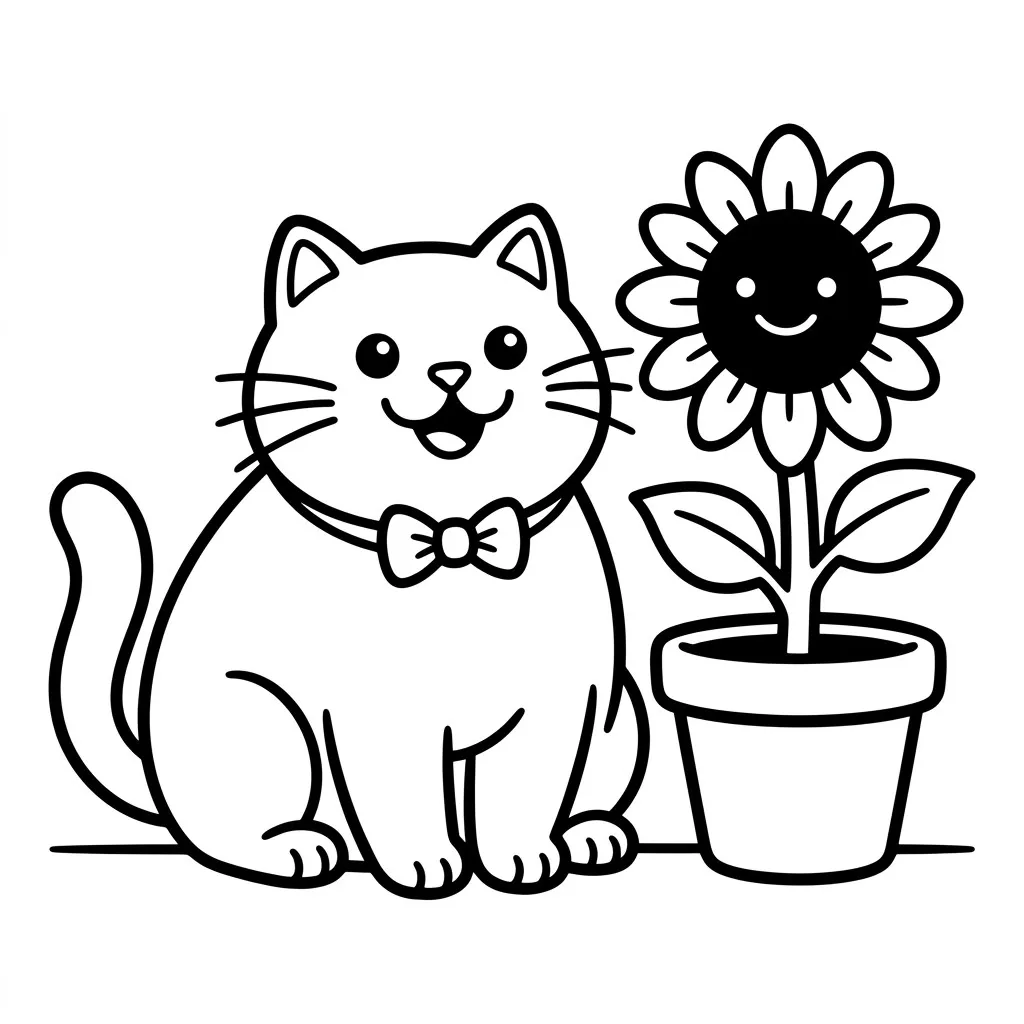
A 'Bold & Easy' joyful win: chunky shapes designed for immediate satisfaction.
This isn't just about staying inside the lines. It’s a targeted sensory strategy designed to give your neurodivergent brain exactly what it craves: a low-stakes, high-reward "quick win." By using joyful coloring pages as a tool for cognitive reset, you can actually hack your brain's reward system to build the momentum needed for larger tasks.
What is Dopamine Coloring?
At its core, dopamine coloring is the practice of engaging in simple, visually stimulating creative tasks that provide immediate feedback. For an ADHD brain, dopamine—the neurotransmitter responsible for motivation, reward, and focus—is often in short supply or inefficiently processed.
Traditional hobbies can sometimes feel overwhelming. A complex 1,000-piece puzzle or a detailed oil painting requires a level of sustained executive function that might be out of reach during a high-stress day. Dopamine coloring, specifically with bold and easy designs, removes the barrier to entry. It provides the "click" of satisfaction that comes from completing a section, choosing a vibrant color, and seeing immediate progress.
The ADHD Reward Gap: Why Quick Wins Matter
The ADHD brain is wired for interest, not necessarily importance. This is why you can hyperfocus on a research project about deep-sea squids for six hours but struggle to spend five minutes doing the dishes.
The "Reward Gap" refers to the long delay between starting a task and receiving the dopamine hit of completion. When a task is too big or too abstract, the ADHD brain effectively goes to sleep.
Joyful coloring pages solve this by offering:
- Immediate Visualization: You see the page transform in real-time.
- Low Cognitive Load: There are no "wrong" answers in coloring.
- Sensory Stimulation: The feel of the pen on paper (or stylus on screen) provides grounding tactile input.
The Science of "Micro-Accomplishments"
Research into neuroplasticity and habit formation suggests that "micro-accomplishments" can prime the brain for harder work. When you finish a small, joyful task, your brain releases a small burst of dopamine. This burst acts as a bridge, lowering the "activation energy" required to start the next task on your list.
How to Practice Dopamine Coloring for Maximum Impact
To turn coloring into a functional ADHD tool rather than just another distraction, consider these three "Cozy Sanctuary" strategies:
1. The 10-Minute Transition
Use coloring as a "buffer" between high-intensity work and rest. If you just finished a stressful meeting, don't jump straight into the next task. Spend 10 minutes with a bold and easy coloring page. This allows your nervous system to downregulate while keeping your brain "online."
2. The Color-to-Mood Match
Don't worry about realism. If you're feeling frustrated, use "angry" neons or deep, heavy strokes. If you're looking for peace, lean into soft pastels. The goal is expression, not perfection.
3. Focus on "Joyful" Imagery
Neurodivergent individuals are often highly sensitive to visual aesthetics. Choose joyful coloring pages featuring themes that make you smile—chunky cats, cozy cottages, or whimsical botanicals. The more the imagery resonates with your "happy place haste," the more effective the dopamine release.
Breaking the Cycle of Perfectionism
Many ADHDers struggle with "all or nothing" thinking. If a coloring page is too intricate, the fear of "messing it up" can trigger anxiety—the exact opposite of what we want.
This is why we advocate for bold lines and simple shapes. When the lines are thick and the shapes are clear, you don't have to worry about fine motor precision. You can focus on the feeling of the color.
FAQ: Dopamine Coloring and ADHD
Q: Is dopamine coloring the same as art therapy?
A: While they share similarities, dopamine coloring is more of a "self-regulation hack." Art therapy is usually a guided process with a professional, whereas dopamine coloring is a quick, independent tool for sensory grounding and motivation.
Q: Can I do this digitally?
A: Absolutely! Many people find digital coloring on a tablet to be even more "dopamine-rich" because they can swap colors instantly and use "fill" tools for immediate satisfaction.
Q: What if I can't stay focused on coloring?
A: That's the beauty of it—there is no commitment. If you only color one leaf and feel better, that's a win. You don't have to finish the whole page in one sitting.
Conclusion: Creating Your Cozy Sanctuary
At Cozy Color Sanctuary, we believe that self-care shouldn't feel like a chore. For the ADHD brain, dopamine coloring is a bridge from chaos to calm. By integrating joyful coloring pages into your daily routine, you're not just "playing"—you're practicing the science of the quick win.
Frequently Asked Questions
Q: What makes your coloring books "ADHD-friendly"?
A: Our books feature 1.2pt Bold Lines and simplified shapes. This reduces visual clutter and decision fatigue, allowing the neurodivergent brain to find flow without feeling overwhelmed by tiny details.
Q: Why should I choose "Bold & Easy" over traditional intricate designs?
A: Traditional adult coloring books can often trigger "Perfectionism Paralysis." Our Bold & Easy style is an antidote to this fear, providing a sensory-safe way to reset your brain in just 15 minutes.
Q: Can I use these for my neurodivergent child?
A: Absolutely. While designed for adults, the clear boundaries and large shapes are excellent for anyone who craves high-contrast, low-stakes creative play.